
Integrated Operations Command · Coordinated Watch

Service Catalogue — Operational Mandate

Six managed services. One operating picture.

Every Command Center service is delivered from a single technology node — so whether you run an Elitez business unit or an external operation, you get enterprise-grade monitoring, response and reporting without standing up your own.

Operations analysts collaborating at a command-centre workstation

How It Works

From field event to resolved incident

An alert moves through the command node in seconds — detection to dispatch, with a human decision in the loop.

01

Field event

A camera or IoT sensor at a site detects an event — a perimeter breach, a missing PPE item, a queue surge.

02

Command node

The feed routes to the command centre in real time; AI classifies it against that site's operational ruleset.

03

AI pop-up

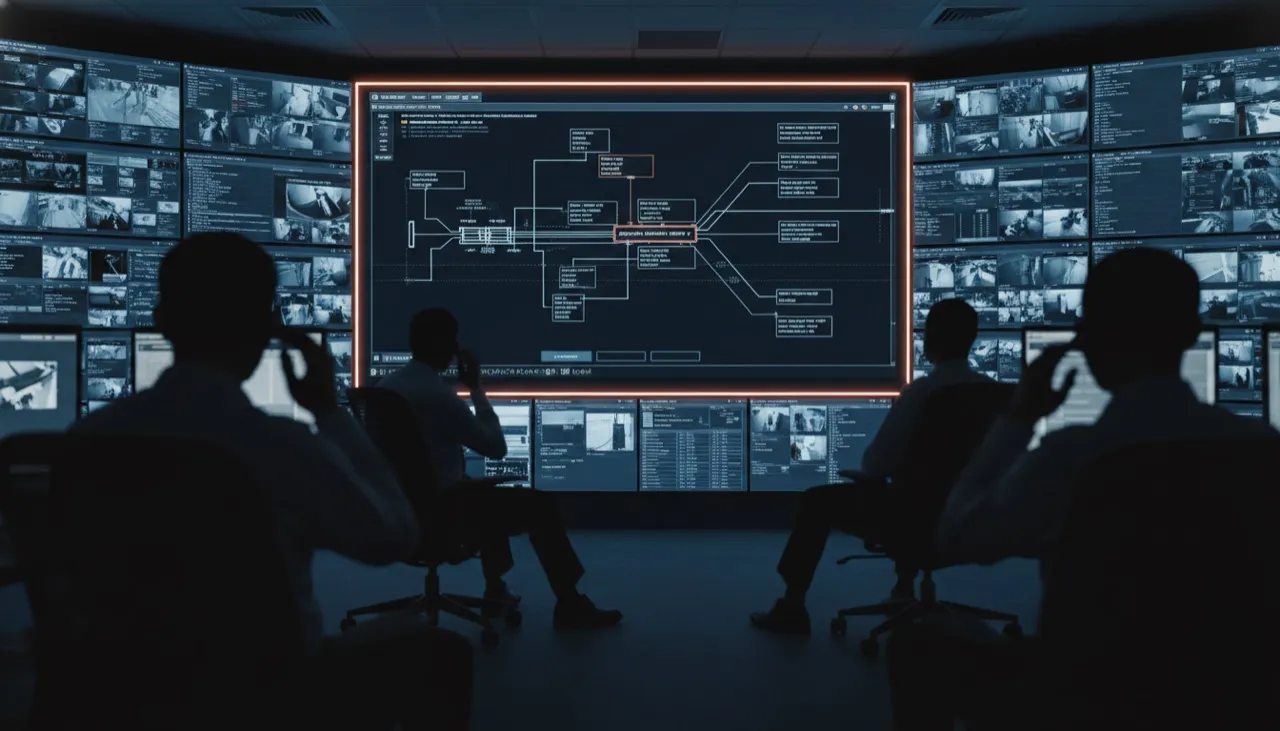
The relevant feed pops onto the video wall with a tactical alert — the operator verifies and decides.

04

Dispatch & log

The nearest officer is geo-routed, IoT controls actioned remotely, and the incident auto-logged to a PDPA-compliant record.

A live alert highlighted on the command-centre video wall

Engagement Model

Two ways to engage the Command Center

Internal — Elitez Business Units

Shared-service cost allocation

Divisions draw on a common command node and are allocated cost by site count and feed volume — no division funds a standalone control room. Onboarding a new BU is a configuration change, not a capital project.

External — Client Subscription

Managed service, monthly billing

External clients subscribe per site or per dormitory — installation, monitoring, dispatch and reporting included. CCaaS white-label lets boutique agencies run under their own brand on Elitez infrastructure.

Begin the Brief

Scope a service package for your sites.

Tell us how many sites you run — we'll map the right services and a costed picture, with a free site assessment.