Capability Brief 02 — Multi-Domain Operating Model
Proven across every domain.
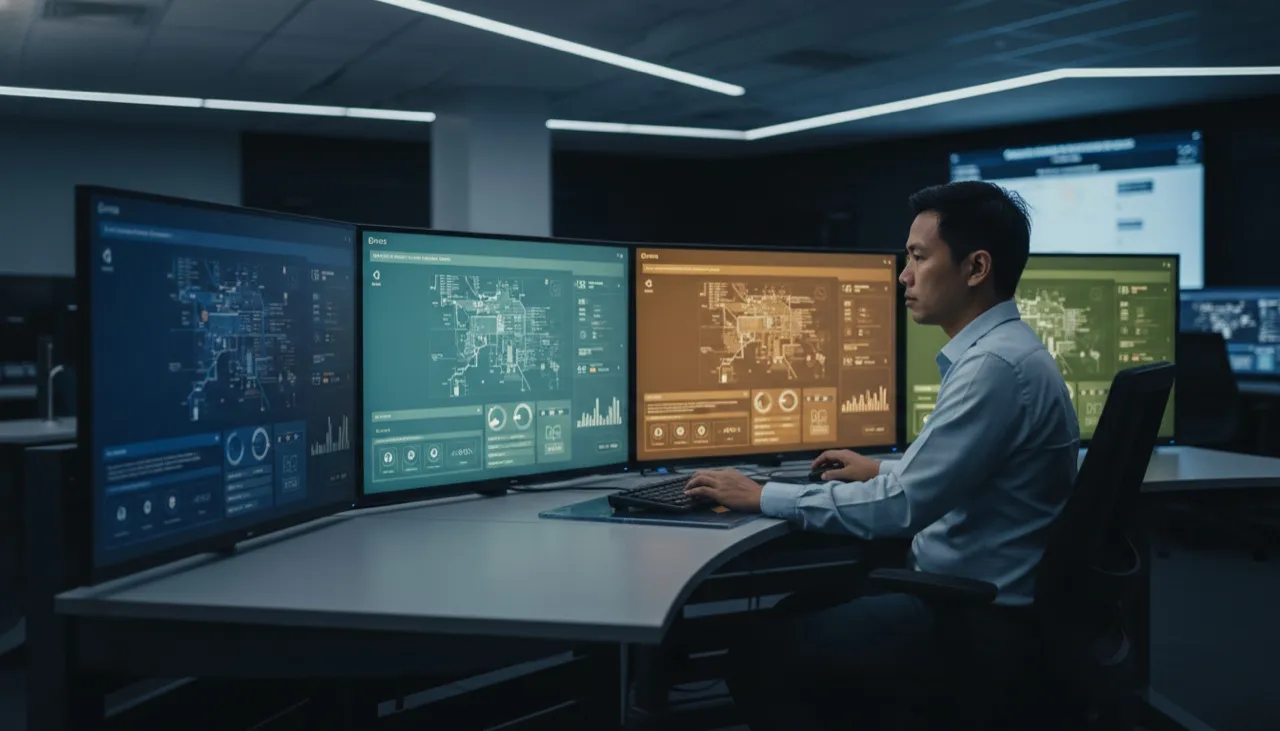
The Vector Sky Defense command node runs one operating model across air, ground, cyber and maritime — detect, classify, decide, dispatch and log. The same loop that watches an aerodrome perimeter coordinates a robotic patrol fleet. One node, one method, every domain.
ONE OPERATING MODEL — RUN ACROSS EVERY DOMAIN
One node. Every domain isolated, every action shared.
Each operational domain runs in its own isolated lane and surfaces onto a shared node, where three engine layers turn raw feeds into decisions and logged actions.
Vector Sky Command Node
ENG-01
ISR Analytics
Parallel computer-vision & sensor-fusion models surface priority events.
ENG-02
Dispatch
Geo-routed tasking of the nearest officer, patrol unit or drone.
ENG-03
Reporting
Timestamped, tamper-evident records of every detection and action.
PRIN-01
Domain Isolation
Each domain and client runs in its own lane — separate rulesets, no cross-bleed.
PRIN-02
Centralised Visibility
One operating picture across every domain, on one hardened wall.
PRIN-03
Shared Autonomy
One AI & dispatch engine serves every domain — built once, fielded everywhere.
PRIN-04
Role-Scoped Access
Every operator sees and acts only within their cleared scope, fully logged.
The same node, fielded across six domains
Select a domain to see how the operating model adapts — context, what it integrates, and the loop it runs.
Aviation Operations
Aerodrome perimeters, airside surveillance and aviation-asset oversight — where late detection of an airspace or perimeter event carries the highest consequence.
- Layered ISR — EO/IR, radar and RF over the airfield boundary
- Crew & technical-staff position and status on the floor
- Airspace events flagged for an operator decision in seconds
// Loop — Aviation
Sensor grid detects an airspace or perimeter incursion.
AI classifies: bird, authorised craft, or hostile UAS.
Priority event surfaces on the wall with track and bearing.
Nearest response asset tasked; the event is logged.
Ground Security
Static and mobile ground forces, perimeter sensors and access control fused into one picture — fewer officers on point, faster verified response.
- Perimeter intrusion and access events on one ruleset
- Officers connected by radio and mobile app for two-way dispatch
- Nearest-unit tasking replaces fixed point manning
// Loop — Ground
Perimeter sensor or camera flags a breach.
AI verifies — person, vehicle, animal, false trigger.
Verified threat raised; operator confirms response.
Nearest officer or patrol dispatched and tracked.
ISR & Surveillance
Persistent intelligence, surveillance and reconnaissance — EO/IR, radar, acoustic and RF feeds fused into a single threat map over the watched area.
- Sensor fusion into one normalised operating picture
- Pattern-of-life and anomaly detection across the watch area
- Cued hand-off to ground, air or autonomous response
// Loop — ISR
Fused sensors track every mover in the watch area.
AI classifies behaviour against pattern-of-life baselines.
Anomalies surface with track history and confidence.
Event cued to the right responder; full track logged.
Counter-UAS & Electronic Warfare
Drone detection, signal monitoring and anti-UAS countermeasures coordinated from the node — the upper-domain threat that conventional guarding cannot see.
- RF and radar detection of unauthorised UAS
- Signal monitoring and electronic countermeasure tasking
- Layered, operator-authorised response — never autonomous lethality
// Loop — C-UAS
RF/radar grid detects an unauthorised drone signature.
AI classifies platform and projects flight path.
Threat surfaces; operator authorises the response tier.
Countermeasure actuated under authority; action logged.
Autonomous Systems
Robotic ground units and drone fleets commanded, tracked and recovered from one deck — persistent patrol without a persistent picket line.
- Scheduled and on-demand robotic patrol routes
- Live telemetry, battery and recovery status on the wall
- Autonomous detection, human-authorised response
// Loop — Autonomy
Patrol unit runs its route; onboard sensors stream back.
AI flags an anomaly on the unit's feed.
Event surfaces with the unit's position and view.
Operator re-tasks the unit or dispatches a responder.
Maritime & Coastal
Coastal radar, vessel tracking and waterfront asset protection — extending the same operating model to where the operation reaches the sea.
- Coastal radar and vessel-track fusion
- Geofenced exclusion zones with automatic alerting
- Hand-off to patrol craft or shore response
// Loop — Maritime
Radar/AIS detects a vessel entering a watched zone.
AI cross-checks track against the cleared-traffic picture.
Unidentified or zone-breaching vessel is surfaced.
Shore or craft response tasked; track logged.
One six-stage loop, every domain
Whatever the domain, the node runs the same loop — from raw detection to a logged, accountable action.
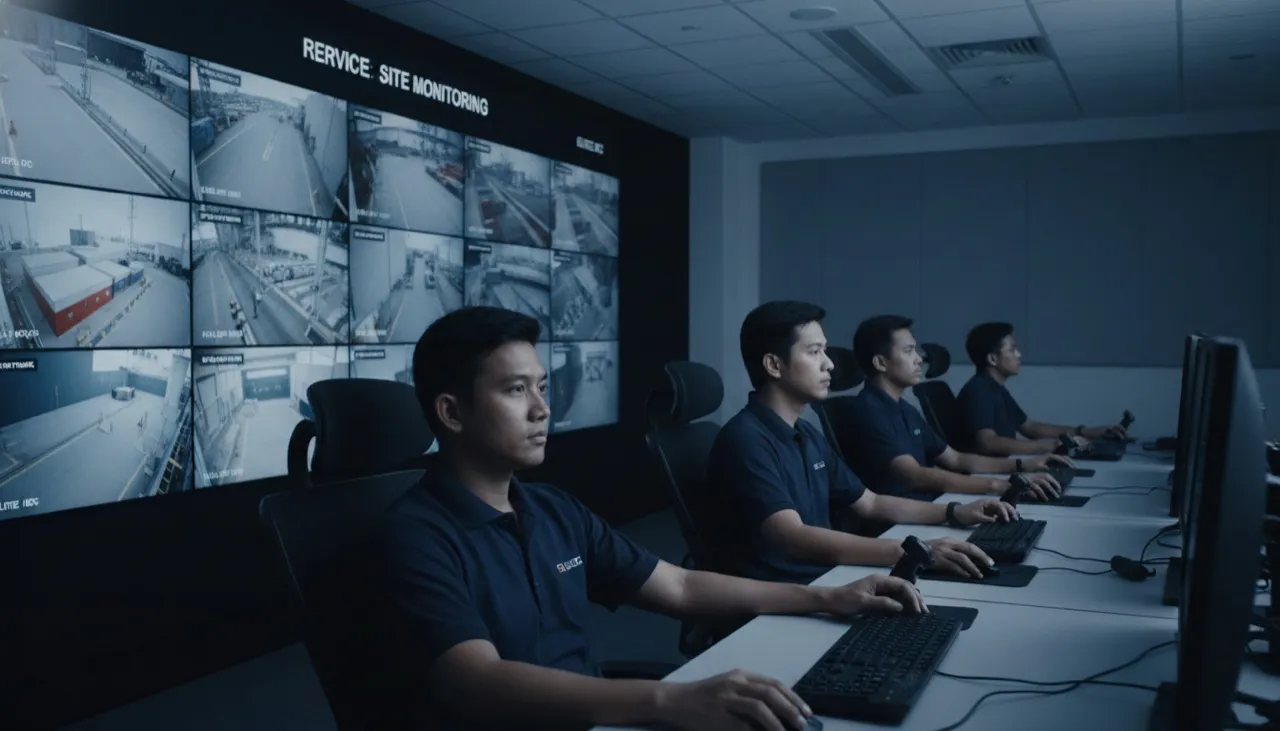
STAGE 01
Detect
Sensors, cameras and feeds stream continuously into the node.
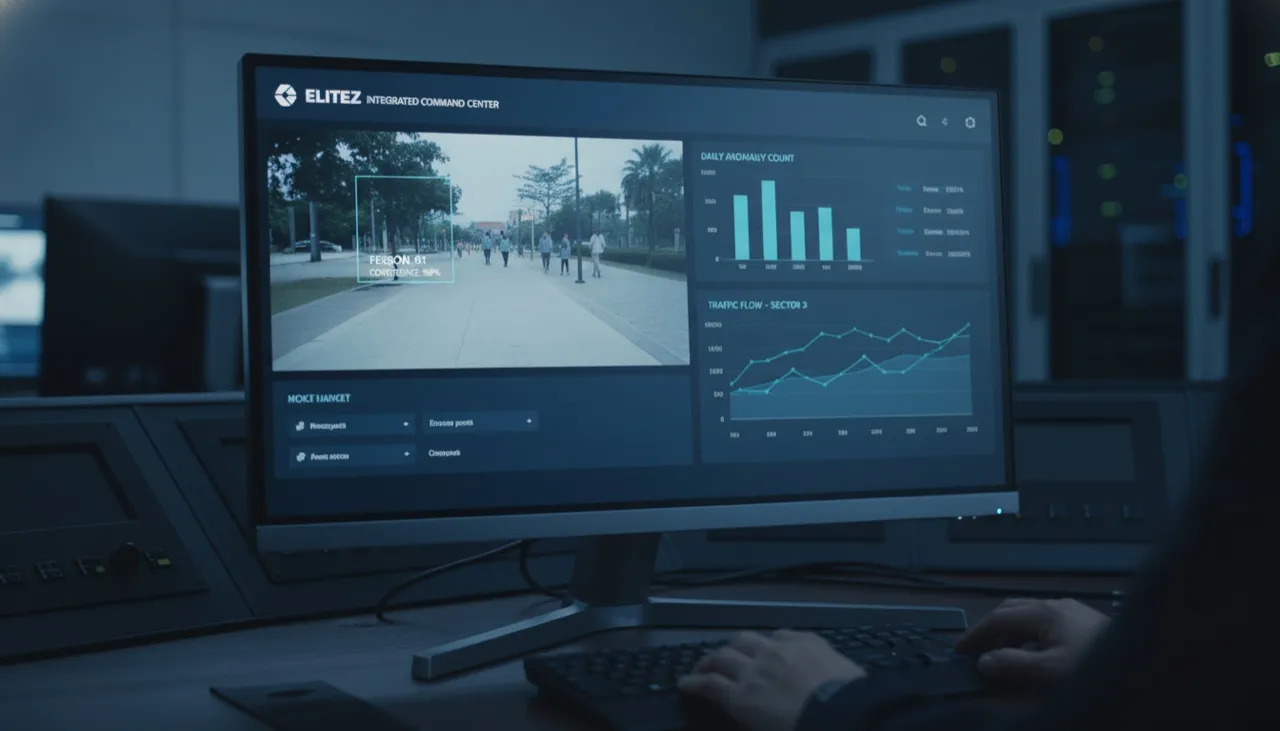
STAGE 02
Classify
Parallel AI models triage every event by type and priority.
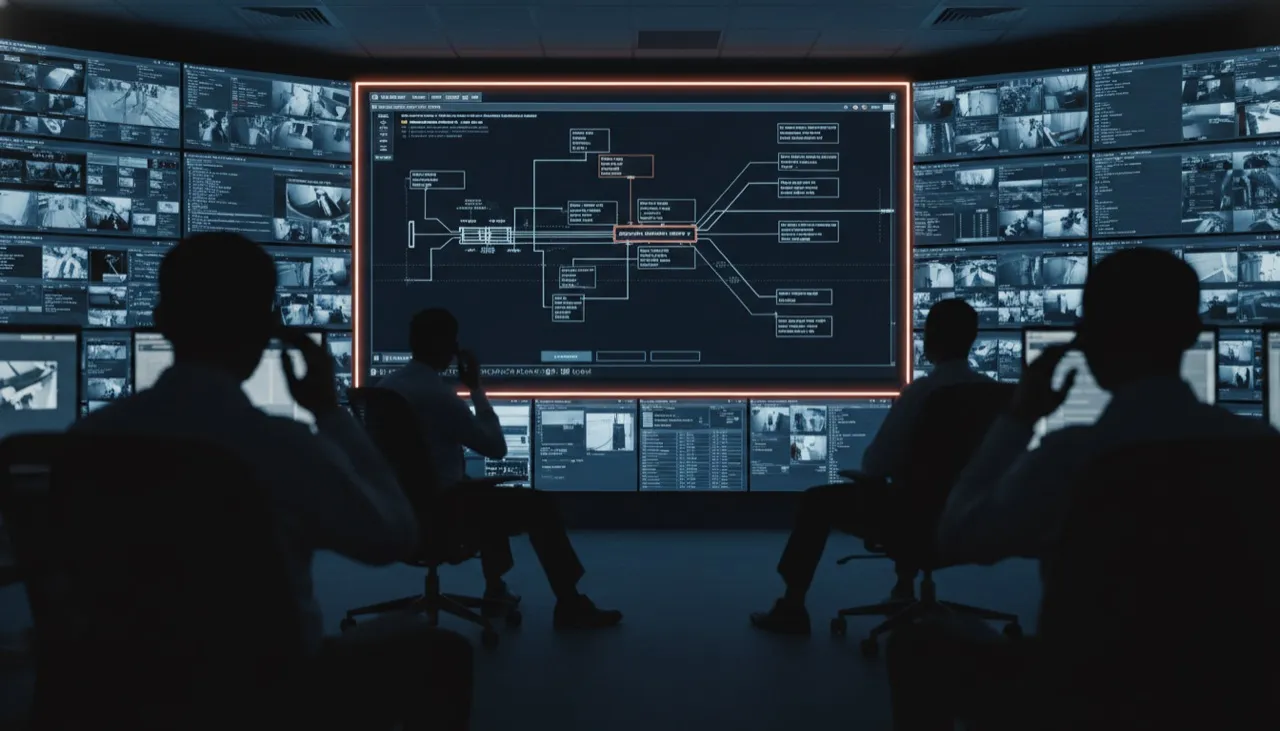
STAGE 03
Surface
Only priority events reach the wall — no noise, no fatigue.
STAGE 04
Decide
A cleared operator verifies and authorises the response.

STAGE 05
Dispatch
Nearest officer, patrol or drone is tasked and tracked.
STAGE 06
Log
Every detection, decision and action on a tamper-evident record.
What the command node sees
Parallel computer-vision and sensor-fusion models run on every feed at once — surfacing the events that matter for an operator decision, at 95–99% precision targets.
DET-01
Intrusion & Perimeter
Line-cross, loitering and breach detection across fenced and open boundaries.
Precision target 99%
DET-02
Drone & Airspace
RF, radar and EO/IR detection of unauthorised UAS in the upper domain.
Precision target 97%
DET-03
Crowd & Behaviour
Density, surge and abnormal-behaviour detection in monitored zones.
Precision target 95%
DET-04
Biometric & Access
Face and credential verification at controlled access points.
Precision target 99%
DET-05
Vehicle & LPR
Licence-plate recognition and vehicle classification at gates and routes.
Precision target 98%
DET-06
Fire, Smoke & Hazard
Early thermal and visual detection of fire, smoke and hazard conditions.
Precision target 96%
From watching the domain to running it
The node doesn't only watch — it actuates. Robotic units, access systems and effectors are controlled from the same deck, then handed progressively to automation.
CTL-01
Robotic Patrol Units
UGV and UAV fleets routed, monitored and recovered from the deck.
CTL-02
Gates, Barriers & Access
Turnstiles, gantries and EM-locks held to one ruleset, every actuation logged.
CTL-03
Counter-UAS Effectors
Detection-cued, operator-authorised countermeasures against hostile drones.
CTL-04
Sensor & ISR Grid
Radar, EO/IR and RF nodes tasked and re-pointed from the floor.
CTL-05
Lighting, Power & M&E
Site lighting, power and environmental systems driven on event triggers.
CTL-06
Virtual Patrol
Scheduled automated sweeps of the camera and sensor grid — no body required.
PHASE 01
Connect
Existing sensors, cameras and systems are wired into the node.
PHASE 02
Control
Operators actuate gates, units and effectors from one deck.
PHASE 03
Automate
Routine responses move to rules — operator confirms exceptions only.
PHASE 04
Predict
Pattern models forecast and pre-position before the event.
If one node runs airspace surveillance, perimeter security and an autonomous patrol fleet, it runs yours.
The operating model isn't built for a single mission — it's the same loop, hardened once and fielded across every domain Vector Sky operates. Bring a new site, a new threat or a new asset class; the node already knows the method.
See the model run on your domain.
A thirty-minute walkthrough maps your sites, sensors and assets onto the command node — and ends with a costed picture of the operating model in your context.